Was the Bible translated correctly?
Blog # 3 - Do you believe the Bible was perfectly translated into English? What do you think? Share your thoughts with us!
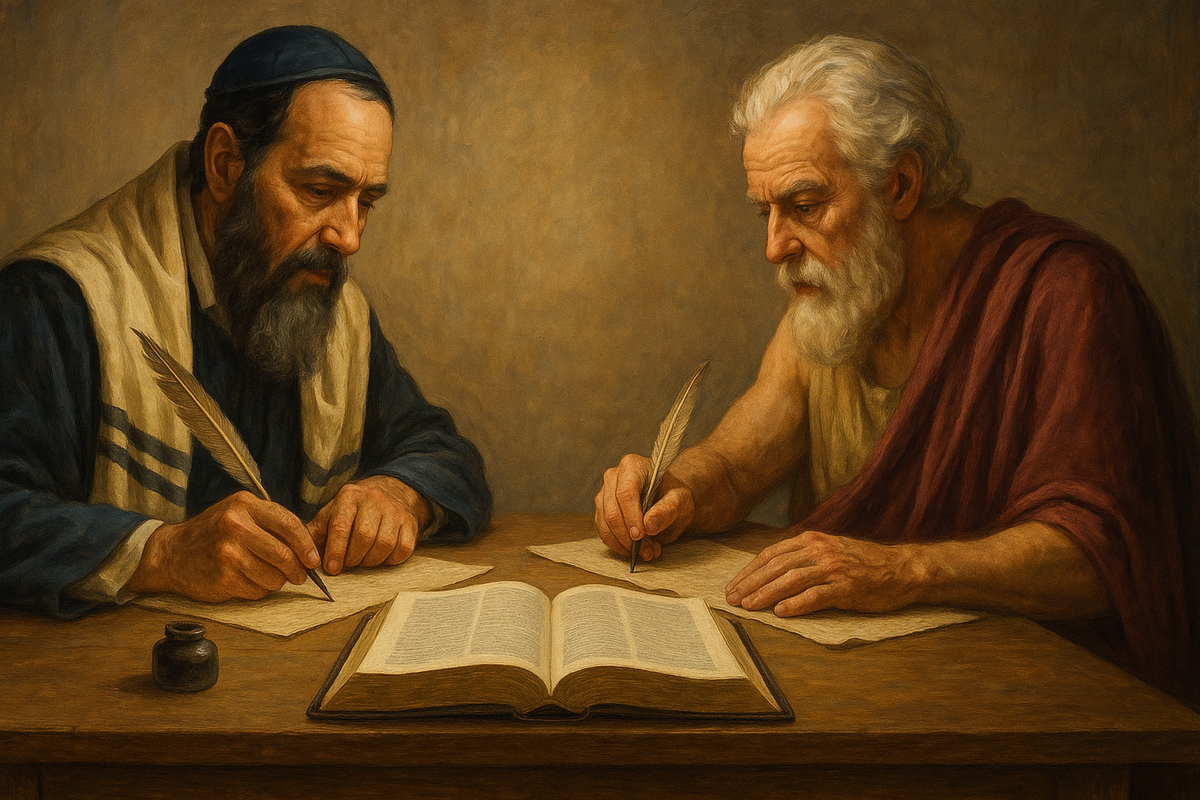
One topic that frequently comes up when discussing the bible, is the matter of its translation. Now historically, it’s understood that the original texts were recorded in primarily three different languages. Ancient Hebrew, Aramaic, and Greek. I often hear, (whether it be amongst believers or non-believers) that since the English tongue was not the true language of the bible, they were unsure of what to believe in. They felt that today’s modern religion had been “altered along the way”. To a degree, I can sympathize with their concerns because there is some truth to that, so let’s dig into it.
Over the years I myself have also heard that some scriptures may not have been translated accuratly. Depending on what the context was, certain words or phrases may have been deemed culturally or morally inappropriate depending on the times and were adjusted somewhere between the Jewish authorities or the Roman Catholic church. Potentially to avoid any blasphemous or sacrilegious thinking, and to preserve the order of the faith.
Now whether all that was true or not I simply do not know. I’m not a Theologist. However, I have been able to see that with some things, even when a change was made to preserve historical accuracy, there are those who do not believe in it and continue doing as they always have. Seemingly ignoring the truth, no matter how much research has been done. Or regardless of any new information that may have been uncovered.
For example, the name of God alone has been a matter of controversy through the times. Even though the ancient texts and relics may say one thing, people tend to refer to him in the context that they fill comfortable with. To illustrate this point, I have listed the different variations of his name found below to show the different titles he has worn in our bibles over the years:
Hebrew Title | Literal Meaning | Scripture | KJV Translation | Modern Translation |
El (אֵל) | God / Mighty One | Genesis 14:18 | God | God |
Eloah (אֱלוֹהַּ) | Mighty / Singular form of Elohim | Deuteronomy 32:15 | God | God |
Elohim (אֱלֹהִים) | God / Divine beings / Plural of majesty | Genesis 1:1 | God | God |
YHWH (יהוה) | The Eternal / I AM / Self-existent One | Genesis 2:4 | LORD or Jehovah | Yahweh |
Adonai (אֲדֹנָי) | Lord / Master / Sovereign | Genesis 15:2 | Lord | Lord |
El Shaddai (אֵל שַׁדַּי) | God Almighty / All-sufficient One | Genesis 17:1 | God Almighty | God Almighty |
El Elyon (אֵל עֶלְיוֹן) | God Most High / Supreme One | Genesis 14:18 | Most High God | Most High God |
El Olam (אֵל עוֹלָם) | Everlasting God / Eternal One | Genesis 21:33 | Everlasting God | Everlasting God |
Jehovah Jireh (יְהוָה יִרְאֶה) | The LORD Will Provide | Genesis 22:14 | Jehovah-jireh | Yahweh Yireh |
Jehovah Rapha (יְהוָה רָפָא) | The LORD Who Heals | Exodus 15:26 | Jehovah-rapha | Yahweh Ropheka |
Jehovah Nissi (יְהוָה נִסִּי) | The LORD My Banner | Exodus 17:15 | Jehovah-nissi | Yahweh Nissi |
Jehovah Shalom (יְהוָה שָׁלוֹם) | The LORD Is Peace | Judges 6:24 | Jehovah-shalom | Yahweh Shalom |
Jehovah Tsidkenu (יְהוָה צִדְקֵנוּ) | The LORD Our Righteousness | Jeremiah 23:6 | Jehovah-tsidkenu | Yahweh Tsidkenu |
Jehovah Shammah (יְהוָה שָׁמָּה) | The LORD Is There | Ezekiel 48:35 | Jehovah-shammah | Yahweh Shammah |
As you can see, there are over a dozen different names and titles that we have for God. Furthermore, if you look closely, names that were originally found in Hebrew (the oldest text), have largely been absorbed into the modern translation (the newest text).
All of God’s titles that originally began with “El” have disappeared, and the term “Jehovah”, has completely changed to “Yahweh”. Now with that being said, it is largely agreed that this is the most accurate translation of the ancient text known as the “Tetragrammaton” which list God’s original name as YHWH. It is stated with no vowels as the ancient Hebrew language dictates.
However, if that’s so then why isn’t the change accepted everywhere? Why are there still denominations and sects that don’t seem to recognize this? Shouldn’t the “Jehovah’s Witnesses”, now be called the “Yahweh Witnesses?” It’s been long enough, right? What are they waiting on?
The same can be said for the King James Bible as well. If Yaweh truly is the name of God, then why does our Holy Bible continue to be printed using Jehovah instead of changing it? In addition, why do these scholars and preachers try to convince us that JHVH is the same as YHWH when it is an “obvious” mistranslation? Why cling to old ways if they are not the truth?
In my life I have come across many people who were ADAMANT that they be addressed by their proper names. Roberts' who didn’t want to be called Bob. Williams' who did not want to be called Billy. Josephs' who did not want to be called Joey, and so on.
Furthermore, I’ve witnessed people get upset if their proper titles as a “Doctor”, or a “Professor” wasn’t recognized. For example, I’ve seen retired military officers still expecting to be addressed by their rank, long after their time of service was over. In fact, it’s seen as a lack of respect not to do so, and it becomes blatantly disrespectful if you continue to do it “after” being informed. There are even some cultures in which you could be punished or killed for addressing certain people improperly.
So I don’t understand how we could have such high respect and regard for ourselves as people, and then as Christians, have such a lackadaisical approach to the name of our almighty creator. It doesn’t feel right. Remember, this is just “ONE” example of the confusion that a translation can bring but there are others. I encourage everyone to search for themselves and see what’s out there.
Moreover, it's also worth noting that even within the “titles” of the 66 books of the bible, some may have issues with how things were translated. For instance, take a look at the chart listed below with the transliterations for the first five books of the bible. In some cases, its spot on and the original meaning is 100% percent what we were told it was. As in the book of Genesis, meaning “the beginning”, perfect right?
However, with some of the others…not so perfect. For instance, the Hebrew meaning for the book of Numbers was originally…“In the Wilderness.” Now I'm sure there must be some context as to why they made this change, but in layman terms, one does not even closely resemble the other, so how did they come up with this transliteration?
Hebrew Transliteration | Greek Transliteration | King James Version | Hebrew Meaning |
Bereshit | Génesis | Genesis | In the beginning |
Shemot | Éxodos | Exodus | Names (opening word of the book) |
Vayikra | Leuitikón | Leviticus | And He called |
Bamidbar | Arithmoí | Numbers | In the wilderness |
Devarim | Deuteronómion | Deuteronomy | Words (Discourses) |
Now to some folks these kinds of things don’t matter. They are going to keep worshipping God and praising the Lord no matter what, and that's ok, I understand that. However, to others it’s huge when it comes to verifying the authenticity of the translation God's word and being able to trust the message within. Besides, even priests and rabbis get into long debates about the interpretation of scripture, so changing the meaning of certain words could potentially reshape the entire narrative of a whole passage or scripture.
It's also worth noting, that having all these different versions of the bible does not do much to help us clear it up either. After doing a quick check online, I found that in English alone there are over 450 different versions of the bible. Many of which have been translated globally into over 2,000 different languages. I have listed the top twenty below:
Bible Version | Year | Translation Type | Typical Denominational Use |
New International Version (NIV) | 1978 | Dynamic Equivalence (Thought-for-thought) | Evangelical / Non-denominational |
English Standard Version (ESV) | 2001 | Essentially Literal (Word-for-word) | Evangelical / Reformed |
New Living Translation (NLT) | 1996 | Dynamic Equivalence | Evangelical / Broadly Christian |
New King James Version (NKJV) | 1982 | Formal Equivalence (Modernized KJV) | Evangelical / Conservative |
New American Standard Bible (NASB) | 1971 | Formal Equivalence | Evangelical / Academic |
Christian Standard Bible (CSB) | 2017 | Optimal Equivalence (Balanced) | Evangelical / Baptist |
New Revised Standard Version (NRSV) | 1989 | Formal Equivalence | Mainline Protestant / Academic |
Common English Bible (CEB) | 2011 | Dynamic Equivalence | Mainline Protestant / Ecumenical |
The Message (MSG) | 2002 | Paraphrase | Contemporary / Devotional |
Revised Standard Version (RSV) | 1952 | Formal Equivalence | Mainline Protestant / Academic |
American Standard Version (ASV) | 1901 | Formal Equivalence | Historical / Precursor to NASB |
Young’s Literal Translation (YLT) | 1862 | Literal Translation | Linguistic / Study Use |
Bible in Basic English (BBE) | 1965 | Simplified English | Educational / Easy Reading |
New International Reader’s Version (NIrV) | 1996 | Simplified NIV | Children / ESL Readers |
Douay–Rheims Bible | 1582 | Latin Vulgate-based | Roman Catholic |
Literal Standard Version (LSV) | 2020 | Strictly Literal | Scholarly / Open Access |
Holman Christian Standard Bible (HCSB) | 2004 | Optimal Equivalence | Evangelical / Baptist |
New English Translation (NET) | 2019 | Balanced / Transparent Notes | Scholarly / Digital Users |
The Living Bible (TLB) | 1971 | Paraphrase | Family / Devotional Reading |
Geneva Bible | 1560 | Formal Equivalence | Reformation-era Protestant |
So, to sum things up, my question is how many other “translations” have you heard of that made you wonder about the accuracy of our scripture? I personally have heard many. Ranging from the original events that occurred in the garden of Eden to Moses and the plagues. From Jesus and the immaculate conception to the book of revelations, to name just a few. There have been “many” instances where the question of, “Was that translated right?” Raised its head when trying to interpret scripture.
So I ask, what about yourself? Surely you must have questioned some things as well. How do you handle it when you run into these issues? Please drop a comment and let me know of your experiences!
-J.G. Robinson